Applications
Molecules driving industrial fermentation, built for them.
From flavor compounds through biopolymers, StrainX Works speeds strain development for whatever your fermentation line produces.
Flavors and Fragrances
Aromatic compounds, terpenoids, vanillin.
Limonene, geraniol, linalool, vanillin, rose oxide.
Yeast and E. coli chassis for aromatic compound production need organism-specific flux rebalancing to reach viable titers. Terpene and aromatic pathways compete with core metabolism differently across strain backgrounds, so conventional screening is non-systematic.
StrainX Works creates organism-specific metabolic models to find pathway flux bottlenecks for your target aromatic compound in its production strain, then generates modification candidates for those constraints instead of surveying generic promoter libraries.
Start with flavors and fragrances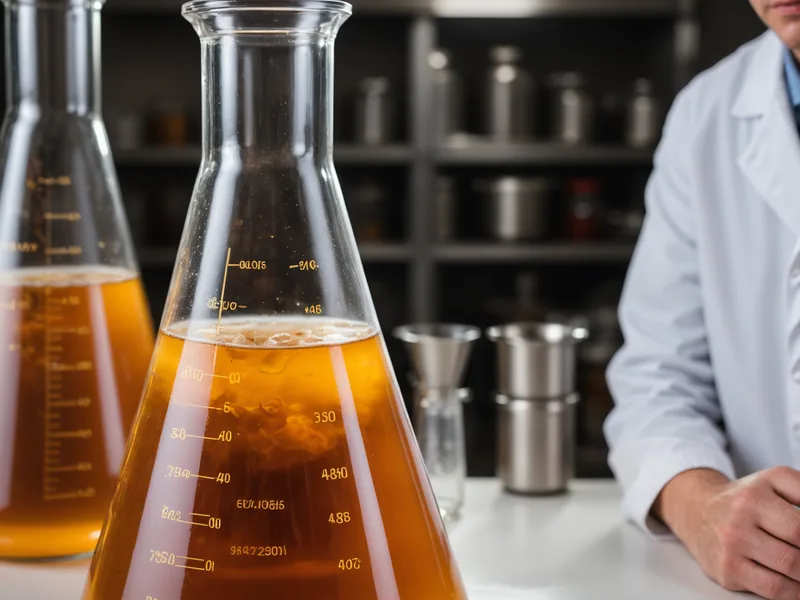
Organic Acids
Lactic, itaconic, citric, succinic acid.
Citric acid, succinic acid, lactic acid, itaconic acid.
Organic acid production balances competing goals: higher titers eventually meet strain tolerance limits. Product accumulation tolerance and carbon source efficiency can conflict, with their interaction varying by organism.
The platform models strain tolerance windows and proposes transporter modifications and overflow metabolism rerouting candidates to address titer and tolerance together. Candidates are scored against your titer target and tolerance constraints, rather than a published benchmark strain profile.
Start with organic acids
Specialty Vitamins and Pigments
CoQ10, beta-carotene, riboflavin, lycopene.
Riboflavin, lycopene, beta-carotene, coenzyme Q10.
High-value pigment and vitamin production needs coordinated pathway edits whose interactions are hard to predict empirically. Competition at branch points between the target pathway and other metabolic branches can make single-gene overexpression ineffective without coordinated context.
Pathway-level flux modeling provides multi-gene modification prediction before lab validation, reducing screens needed to find combinations that redirect flux toward the target product without destabilizing growth.
Start with vitamins and pigments
Biopolymers
Polymer yield, PHA, bacterial cellulose.
Polyhydroxyalkanoates (PHA), bacterial cellulose.
Biopolymer yield and physical properties depend on strain physiology, varying greatly across production organisms and fermentation conditions. Balancing growth rate with polymer accumulation calls for inducible expression modifications timed to fermentation phase, rather than static overexpression.
Organism-specific models capture production-environment constraints, including growth-production trade-offs that emerge only at your fermentation scale and in your media. Candidates suit your operational context, not a published lab benchmark.
Start with biopolymers
Working with another molecule?
Share your target compound and organism. We will show how the platform fits your process.