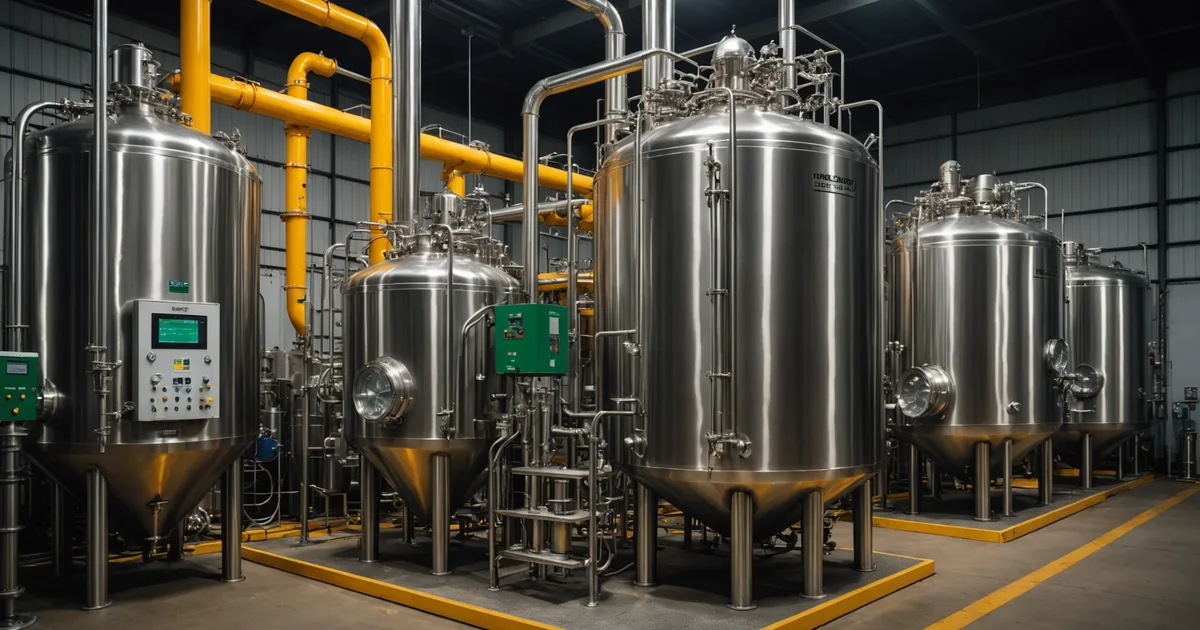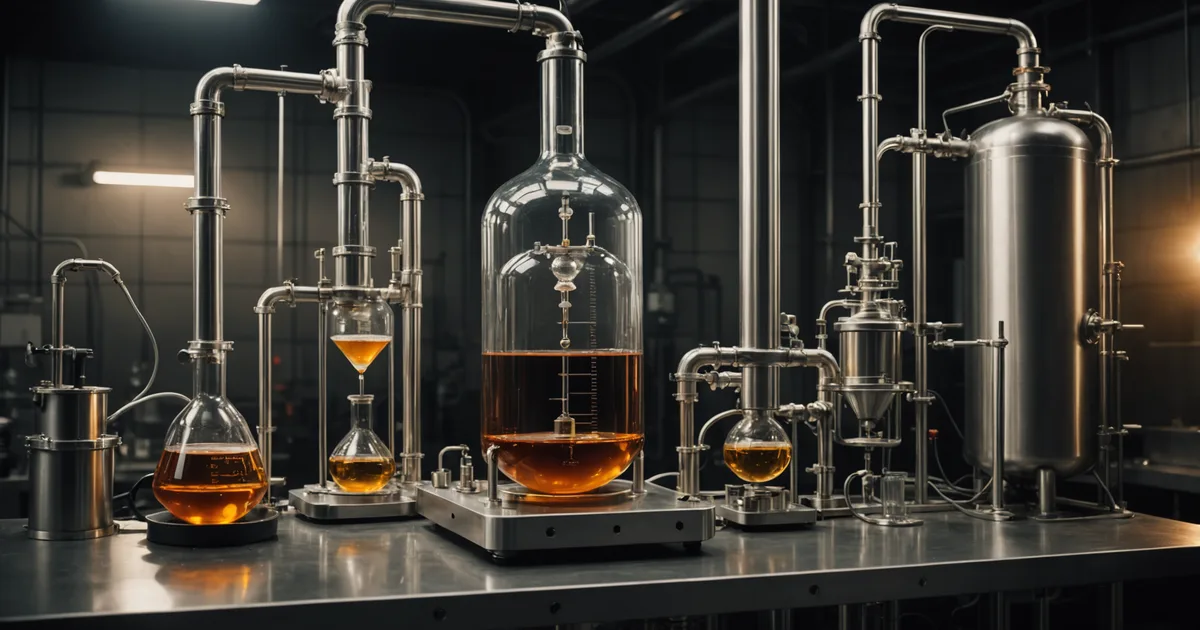
Industry teams know that shake-flask results do not reliably forecast bioreactor results. Results from a 2-liter vessel also do not reliably forecast a 1,000-liter run. Even so, strains that look excellent at bench scale still suffer major production losses during pilot work. The problem is rarely that teams have missed the general warning about scale-up. More often, the actual causes remain hidden in small-scale data and appear only when an expensive pilot run exposes them.
Separating predictable scale effects from genuine surprises is more useful than simply warning that scale-up is difficult.
Dissolved Oxygen: The Clearest Scale-Up Mismatch
Dissolved oxygen, or DO, is the explanation most often raised in scale-up work, and its physical basis is relatively clear. In a shake flask, oxygen transfer depends on surface-to-volume ratio and agitation. In a stirred tank, the main measure is the volumetric mass transfer coefficient, kLa. Impeller design, power per unit volume, superficial gas velocity, and liquid properties all affect it. Moving from 2 liters to 1,000 liters while preserving comparable kLa is an established process engineering task, not a matter of applying simple geometric ratios. Power density and impeller tip speed change non-linearly. At large scale, matching kLa may require tip speeds that expose cells to shear conditions unlike those in the smaller vessel.
A strain selected under the DO pattern of a flask or small stirred tank may therefore behave differently under the DO pattern available in a large vessel. The effect is greatest when yield depends on oxygen: for example, in aerobic organisms whose product pathway contains oxygen-dependent steps, or in organisms where low oxygen turns on fermentative routes that pull carbon away from the target. Such strains can look excellent under tightly controlled bench conditions, then lose performance at pilot scale, where DO gradients are broader and oxygen-limited periods last longer.
StrainX Works uses GEM analysis to examine oxygen sensitivity. For a candidate and its target molecule, the FBA simulation runs across oxygen availability levels to test whether predicted yield becomes sensitive below what the pilot vessel can provide. Candidates needing a narrow oxygen range for peak production are marked as scale-up risks before pilot resources are assigned. This cannot remove the risk, but it gives the team time to change the strain or process conditions.
Mixing Time and Concentration Gradients
Mixing takes longer as vessels grow, commonly increasing roughly with the square of characteristic length. At bench scale, mixing is measured in seconds. In a 1,000-liter pilot vessel with typical impellers, it may take 30 to 90 seconds. During that interval, cells in separate parts of the tank encounter different substrate, product, and dissolved-gas concentrations. Many production organisms reduce biosynthetic activity when substrate rises above a threshold. In those organisms, local gradients can create phenotypic differences across the culture that a bench run does not reveal.
This matters especially in fed-batch operation, where substrate enters at a defined feed point. In a large tank, the incoming feed can form a high-substrate region and trigger transcriptional responses in cells passing through it. Cells elsewhere experience different conditions. The culture average may still show acceptable productivity, but individual cells can behave differently. Over a long fermentation, that variation can destabilize growth and production. A cell near the inlet may respond to a substrate pulse while another cell elsewhere does not.
Bench data cannot directly predict this well because the bench culture is well mixed and gives nearly every cell the same surroundings. It can indicate whether the strain's regulatory design is likely to react to substrate fluctuations. GEM analysis and the generative model can partly address that question by tracing links between substrate sensing and expression of the production pathway.
Foam, Antifoam, and the Physical Conditions Often Missed
Foaming becomes more likely as fermentation scale increases. The aeration-to-liquid-volume ratio can be higher, longer runs give surface-active proteins more time to accumulate, and sparger design and vessel geometry influence foam in scale-dependent ways. Antifoam controls the problem, but it is not biologically neutral. It can partition into cell membranes, change oxygen transfer coefficients, and sometimes inhibit growth or production pathways directly.
A strain developed without antifoam may reach pilot scale with no evidence about its response to the agent or to the concentration required. The remedy is simple: include antifoam during bench characterization at a concentration representative of pilot operation. That step seems obvious after antifoam sensitivity explains a failure, yet teams often skip it because a controlled, non-foaming bench run gives no visible warning.
How Strain Construction History Shapes Scale-Up
How a strain was engineered can influence its behavior during scale-up, although this is often overlooked during construction. Rationally modified strains built with known, well-characterized components generally offer more predictable scale-up than strains produced by random mutagenesis or adaptive laboratory evolution. Their phenotype has a defined genetic basis, which can be examined for stability across the conditions expected at larger scale.
A production strain made through mutagenesis may contain useful regulatory mutations selected under a narrow laboratory protocol. If pilot fermentation conditions alter the regulatory effect, production can fall, and diagnosis is difficult because the responsible mutation was never identified. Sequencing the strain after mutagenesis and evaluating whether each change may act differently at scale takes time, but it lowers the chance of this failure mode.
We are not saying mutagenesis-derived strains are unsuitable for scale-up. Many top-performing industrial production strains came from mutagenesis programs. The point is that confident scale-up usually demands more characterization for these strains than for rationally engineered ones, and project plans often budget too little for that work.
Practical Scale-Up Readiness Criteria
Before sending a candidate to pilot, a useful readiness review asks the following:
Has the strain been tested across DO setpoints that cover the range the pilot vessel can deliver? If yield falls sharply below 40% saturation, the pilot design needs to account for that behavior. Is the genetic construct stable through the longer culture period expected at pilot scale? A plasmid stability assay covering 30 to 40 generations under the expected selection conditions supplies that evidence. Has the strain been tested with the pilot antifoam and its expected concentration range? If not, a bench test before the run is worthwhile. Finally, can the measurement system detect a 30 to 40% productivity loss, or would that change disappear into measurement noise? Drops of that size are not unusual, and poor resolution makes root-cause analysis after a failed pilot much harder.
These checks are not new. Process development textbooks and long-established industrial fermentation guidelines already describe them. Teams use them inconsistently because pilot pressure is real, and each check lengthens bench development. The calculation looks different after a team has paid for a failed pilot caused by one of these avoidable gaps.