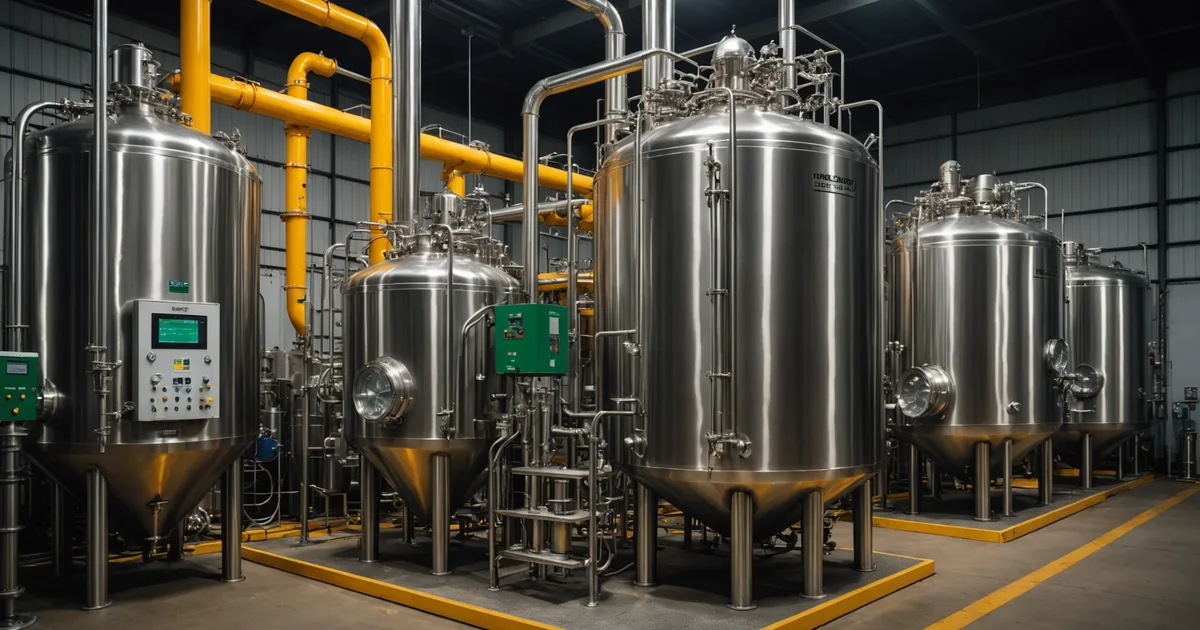
A strain that repeatedly reaches its target titer, yield, and productivity in a 2-liter bench run is usually cleared for pilot work. The team schedules the vessel, builds the inoculum train, and starts a 500-liter run. Titer reaches only 40% of the bench prediction, while productivity falls apart during logarithmic growth. After 72 hours, the run is written off.
This pattern is familiar across industrial biomanufacturing. Teams call it scale-up failure, pilot failure, or simply, "it did not transfer." The immediate bill includes media, utilities, staff time, cleaning, and vessel preparation, often reaching hundreds of thousands of dollars for a meaningful pilot fermentation. The less visible costs, including delayed milestones, reassigned development staff, and lost pilot capacity, can exceed that bill.
The key question is what drives failure, and which parts of that chain could be seen before the culture entered the pilot vessel.
Why Bench Results Miss Pilot Behavior
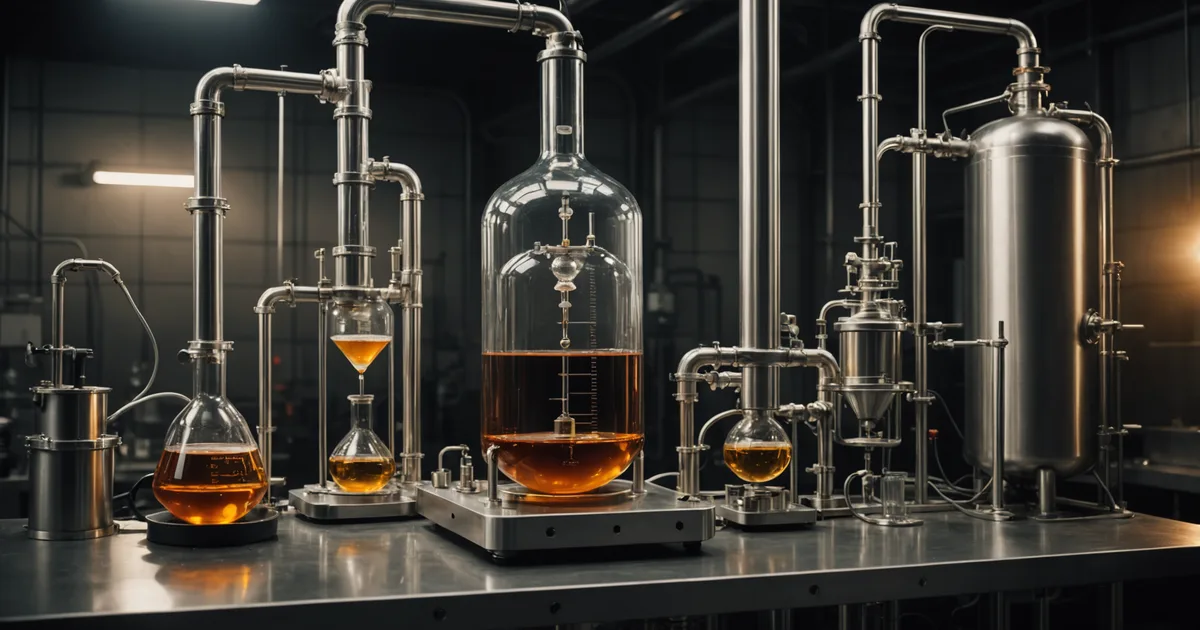
The physical gap between a 2-liter stirred tank and a 500-liter vessel is familiar: impeller tip speed and mixing time shift nonlinearly, oxygen delivery and CO2 removal become harder, temperature and pH gradients widen, and cells encounter a different shear environment. Engineers account for these effects in process design. They can tune kLa, power per unit volume, and tip speed to approximate bench conditions at pilot scale.
Those calculations also assume the strain will respond consistently when the physical setting changes, as long as the main process parameters are held. Often it does not. A strain optimized in the tightly controlled environment of a 2-liter run may contain modifications that make it vulnerable to the gradients that become larger at scale. For example, a strain built to maximize biosynthetic flux under high dissolved oxygen may react poorly to the temporary oxygen gradients produced during mixing in a 500-liter vessel. A strain overexpressing stress response genes may grow competitively in uniform bench conditions, then regulate abnormally when those conditions become uneven.
Strain Instability Beneath the Failure
Root-cause reviews often find strain instability, though it is rarely the first diagnosis. Teams usually begin with process questions: was dissolved oxygen correct, was pH control adequate, or did contamination occur? Those checks often find nothing wrong. The failure is then assigned to "scale-up effects," a broad label covering several possible mechanisms.
At scale, instability appears in more than one form. Genetic instability is the clearest example. A strain carrying a plasmid expression cassette or an integrated pathway under strong selection can acquire mutations that reduce or remove the construct when selection weakens. That relaxation is common in large fermentations, where maintaining antibiotic concentrations used at bench scale is impractical. After 40 to 60 generations, a substantial share of the population may no longer retain the target construct in its original form.
Metabolic instability is harder to spot. Heavy overexpression of a target pathway may be tolerable in the nutrient-rich bench vessel but become growth-limiting or lethal when nutrients are locally depleted in a poorly mixed large vessel. The strain keeps its measured bench phenotype until the environment changes, then fails to do so. Since scale creates the shift rather than a process-control mistake, routine bioreactor monitoring may not reveal it.
What Modeling Can Expose Before Pilot
The GEM analysis behind the StrainX Works platform includes a check for scale sensitivity. It uses flux variability analysis, or FVA, instead of single-point FBA. Rather than asking for the optimal flux distribution under given conditions, FVA asks how far each flux can move from optimum before growth or production drops below an acceptable threshold. A narrow FVA window around a critical biosynthetic flux signals possible sensitivity to the environmental changes found at scale.
This screen cannot promise a successful scale-up. FVA relies on a stoichiometric model, which does not represent every regulatory or kinetic mechanism active in the vessel. It can still filter candidates for likely stability problems before pilot resources are spent. In our work with early-access partners, strains showing high FVA sensitivity at key pathway nodes have underperformed at scale more often than strains with broad allowable flux ranges. That points to useful predictive value, although the method is not exact.
Where Scale-Up Failure Costs Accumulate
The failed pilot invoice is easy to see, but it is usually only part of the damage. Take a project with 16 weeks of bench work and a failed pilot in week 20. Root-cause work takes 4 to 6 weeks, finds a plasmid stability problem, and leads to an expression-construct redesign. The revised strain then needs another 8 to 10 weeks at bench scale. A second pilot succeeds in week 38. The project has taken 38 weeks instead of the expected 22, adding 16 weeks of development across 3 to 5 scientists. In most cases, that staff time costs more than the failed run.
The later the failure appears, the steeper the cost. A failed 500-liter pilot may still be recoverable. Discovering the problem in a 10,000-liter production trial, after equipment qualification and process validation, could end a small-company program or force a costly reset at a larger company. Finding instability earlier therefore has very high economic value.
Practical Checks Before the Pilot
Several pre-pilot steps can lower failure rates, and computation is only part of the toolkit:
Longer bench fermentations are often skipped. Holding a strain for 96 to 120 hours, rather than stopping at the minimum production cycle, may expose genetic drift or metabolic instability absent from a 48-hour run. Two extra bench runs cost little beside a failed pilot, while the longer phenotype shows whether performance stays consistent across multiple generations.
Include plasmid stability in the scale-up review. Grow the strain without selection for 20 to 30 generations, then plate it and measure retention of the selective marker. This directly tests genetic stability, which GEM analysis cannot. If over 5 to 10% of colonies have lost the marker, redesign the construct before entering pilot.
Stress testing can also reveal tolerance limits. Expose the strain to the product levels expected near peak titer in a large vessel. This can uncover limits hidden by the dilute, early-stage bench environment, especially for organic acid or alcohol products that inhibit growth at high concentration. These checks will not catch every scale-up surprise, and some failures genuinely appear only at scale. They do target common causes at a small fraction of pilot cost.
Development Speed Versus Scale-Up Readiness
Compressed timelines raise a fair concern: does moving faster increase scale-up risk? If a bench candidate arrives in 6 to 8 weeks instead of 18 months, is it characterized well enough for pilot? That depends on the definition of sufficient characterization. A 6-week candidate with a few understood modifications and documented genetic stability may be better prepared for scale-up than an 18-month candidate created by random mutagenesis with dozens of unknown background mutations. Speed and readiness are not automatically in conflict. The development method determines whether they become a tradeoff.