Infrastructure delays carry a real cost, so location matters. Genome Valley sits in Turkapally, north of Hyderabad in Telangana. We built StrainX Works here by choice. This article looks at the cluster, its value to a computational strain design company, and the limits we see as a small team working on industrial biomanufacturing.
This is not regional promotion. Clusters everywhere offer benefits alongside gaps. Both matter more than broad claims about Indian biotech, particularly for teams abroad exploring partnerships with companies based here.
Genome Valley in Practice
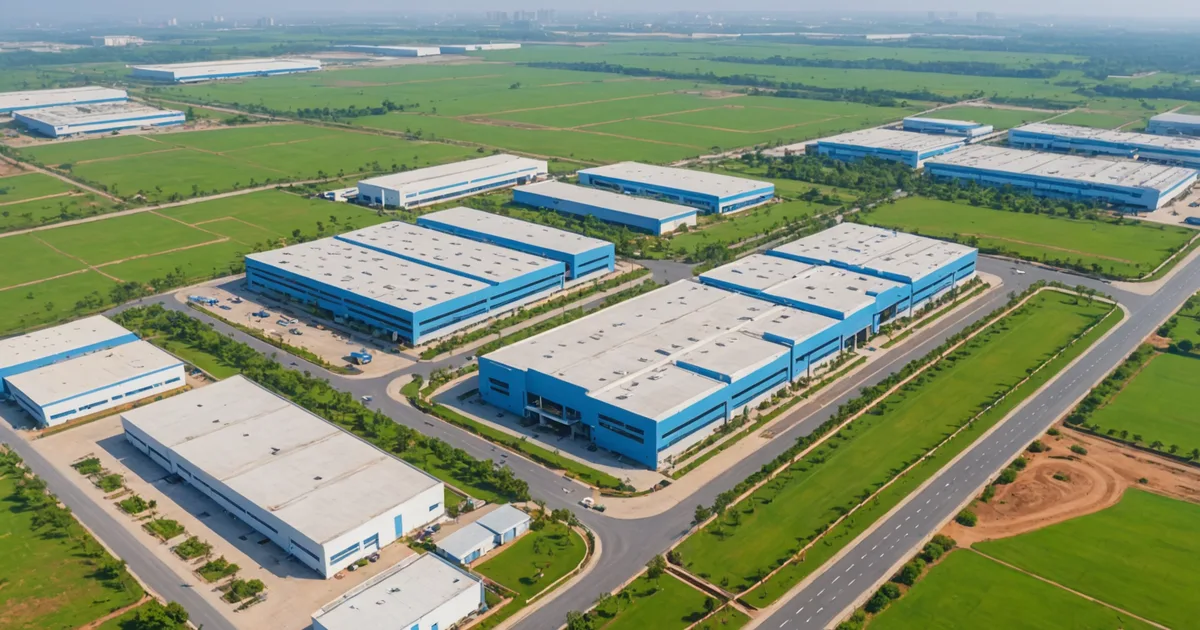
The Genome Valley Special Economic Zone spans approximately 1,000 acres of developed industrial infrastructure in Shameerpet mandal, Medchal-Malkajgiri district. Created in the early 2000s with government support, it brought pharmaceutical and biotech companies together with shared roads, power, water, effluent treatment, and customs help for imported biological materials and equipment.
Pharmaceutical manufacturers and contract research organizations now make up most of the cluster. Larger tenants generally handle bulk drug synthesis and formulation. Biological R&D is a smaller part of the whole, focused mainly on vaccines, diagnostics, and biosimilars. Computational biology and strain engineering companies such as StrainX Works are newer and few.
As a result, the cluster serves large pharmaceutical manufacturing better than early fermentation R&D. That follows from its history and tenant base, rather than representing a flaw. A company combining bench fermentation with computational modeling does not match the usual tenant profile, and shared services may be designed for manufacturing operations rather than a small research group.
Hyderabad's Technical Talent
Hyderabad offers a large local pool with relevant technical training. Institutions including the National Institute of Pharmaceutical Education and Research, the Centre for Cellular and Molecular Biology, the Indian Institute of Chemical Technology, and Osmania University's chemistry and life sciences departments produce graduates in biotechnology, biochemical engineering, and computational biology. The University of Hyderabad is especially strong in computational biology and bioinformatics.
The training is substantial. Computational biology graduates often bring the modeling and bioinformatics foundations our work requires. Availability is not the main issue. Many top candidates leave for Bangalore, Mumbai, or jobs abroad, so retention is weaker than we would prefer. Keeping people requires competitive pay and worthwhile technical problems. For us, metabolic modeling and generative design offer a stronger reason to stay than routine bioinformatics support.
Fermentation and bioprocess hiring looks better. Hyderabad's pharmaceutical manufacturing base has produced many engineers with practical experience in industrial fermentation. Finding people who have worked with large-scale fermentation is easier here than in a city without that base. That local knowledge directly helps a platform focused on industrial biomanufacturing.
Lab Supplies and Infrastructure
Indian lab supply chains have improved over the past decade, but specialized reagents and equipment remain slower and less predictable to obtain than in the United States or major European biotech centers. Imported biologics reagents, Western molecular biology kits, and specialized fermentation components may take 4 to 8 weeks on standard orders, and longer for uncommon items. Biological materials also require customs documents, with clearance delays that are hard to forecast.
This weighs less on a computational platform than on a wet-lab-first company. StrainX Works centers on software and metabolic modeling, while wet-lab work confirms results rather than leading discovery. We chose this structure partly because rapid wet-lab iteration would be a harder critical path in Hyderabad. That constraint materially shaped our company.
Indian fermentation partners already work within these supply limits. For a team abroad, the key question is whether our computational output, including modification proposals and model analysis, can be transferred into its own laboratory. That is our intended arrangement, and it keeps the partner's reagent supply chain separate from ours.
Policy, BioE3, and Industrial Biotech
India's BioE3 policy framework, announced in 2024, matters to industrial biomanufacturing. It names fermentation-based chemical and material production as a priority, with policy support stated for scale-up infrastructure, regulatory routes for novel biological products, and early-stage biotech funding.
Announcements and delivery follow different schedules, and I cannot say how quickly BioE3 will be implemented. The direction does support our work. Since the announcement, our discussions with Telangana's state biotech development bodies have been substantive, not ceremonial. Whether that becomes a material benefit for a company at our stage within 12 to 24 months is still uncertain.
We are not presenting Genome Valley or BioE3 as proof that India is an easy place to build an industrial biotech startup. Our point is narrower: technical talent, pharmaceutical manufacturing expertise, government attention, and cluster infrastructure make the setting workable for the company we are building. Gaps remain. Deep-biotech venture funding is thinner than in the United States, large fermentation partnerships are harder to reach, and Boston or Cambridge-style shared infrastructure is not available here in equivalent form.
Working with StrainX Works
For an industrial fermentation team considering us, our location shapes both our knowledge and our platform. We understand batch and fed-batch production problems as practitioners encounter them, not only through model-organism literature. That perspective comes from Genome Valley and from the people we have hired.
The practical limitation is rapid, shared wet-lab work. We are not saying stability tests can be dropped; we are saying our role is not embedded bench engineering beside a partner in real time. We fit teams seeking computational designs to run in their own fermentation facility, while we handle metabolic modeling and proposal generation and they perform experimental validation. This division matches both the platform and our operating environment.